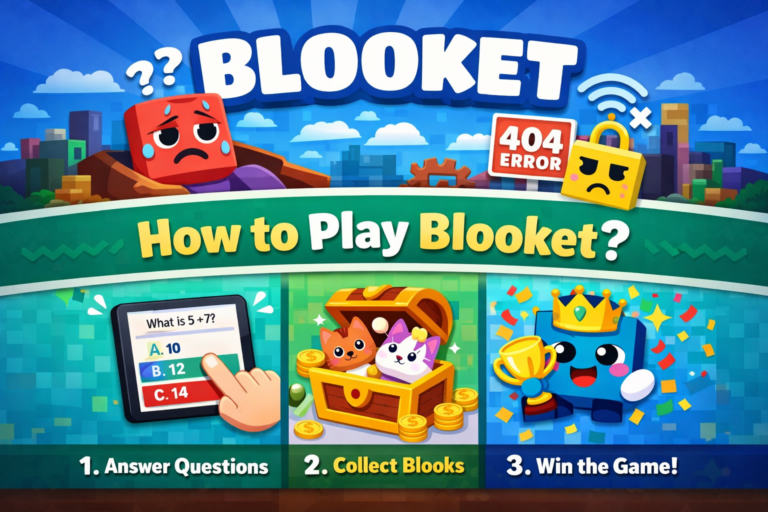
When the Blooket Code Suddenly Stops Working, A Few Thoughts to Keep the Fun Going.
There’s a special kind of disappointment that hits when you’re sitting in class, phone or Chromebook open, ready to jump into a Blooket round with the rest of your friends. The teacher just announced the game, everyone is excited, the questions look interesting, and then… the code you were given no longer lets you in. That little message saying the link or code has expired feels like the whole energy of the moment just deflated. It’s not a huge problem in the grand scheme of life, but in that exact second it can feel surprisingly big.
Almost every student who has played Blooket more than a handful of times has experienced this. One minute the whole class is laughing about silly answers and cheering for leaderboard climbs; the next minute half the group is stuck outside the game while the other half keeps going. Teachers feel it too, they spent time picking the right set of questions, explaining the rules, and getting everyone hyped, and then suddenly a technical hiccup makes it seem like the whole plan fell apart. It’s easy to get annoyed or think, “Why does this always happen to us? ”.
But here’s something worth remembering: these little interruptions are actually proof that Blooket is being used a lot. When a game ends or pauses, the system quickly clears the space so a new group can start fresh. It’s like a classroom door that closes gently after one lesson so the next class can come in without chaos. That quick close-down protects everyone’s privacy and keeps things running smoothly for millions of players around the world every day. So while the expired code feels personal and unfair in the moment, it’s really just the platform doing its job in the background.
What makes these moments sting a bit extra is the social side. Blooket isn’t just about answering questions; it’s about being part of something together. You see your friend’s funny nickname climb the ranks, you celebrate when someone finally gets the tricky question right, and you groan together when the timer runs out too fast. When you can’t get in, you miss that shared feeling. You watch from the sidelines while everyone else is having the fun you were looking forward to. That’s the part that can make a kid feel left out or make a teacher worry that the lesson lost its spark.
The nice thing is that the pause is almost always very short. In most classrooms the teacher notices quickly, makes a small adjustment on their side, and within a minute or two the game opens up again, sometimes even stronger because now everyone is extra motivated to catch up. Those quick comebacks often lead to the most memorable rounds. The energy is higher, people cheer louder for correct answers, and the whole class feels like they overcame something small together.
Over time you start to see these expired-code moments differently. They become part of the Blooket story rather than a roadblock. You laugh about it later: “Remember when half the class was locked out and we still won?” or “That time the code died right before the final question and we all panicked.” Those stories turn into inside jokes that make future games even more enjoyable. The tiny frustration becomes a badge of how much you care about playing.
For teachers, these situations are actually teaching moments in disguise. They show students how to handle unexpected problems calmly, how to communicate politely when something isn’t working, and how to stay positive even when plans change. Watching a teacher stay relaxed, smile, and say “no worries, let’s try this instead” is a powerful example. Kids remember that kind of composure more than they remember any single quiz score.
Parents sometimes worry when they hear about these little tech hiccups, thinking it means the game is broken or unreliable. But the truth is the opposite. Blooket stays popular year after year precisely because the team keeps improving how smoothly everything connects , even on school networks that are very strict about what’s allowed. Every update makes these interruptions rarer and shorter. What used to take five minutes of confusion now usually takes thirty seconds of teamwork.
At its heart, Blooket is about joy more than perfection. It’s about that rush when you answer fast and see your points shoot up. It’s about discovering you actually remember more than you thought. It’s about your classmate’s silly avatar doing a little dance when they win. A code that stops working for a minute doesn’t take any of that away; it just adds a small plot twist to the story of the day.
So next time the code lets you down, take a deep breath. Look around at your classmates; half of them are probably in the same boat, making the same confused faces. Share a quick laugh about it. Then wait for the teacher to work their magic (they almost always do). When you get back in, the game will feel extra sweet because you earned it through a tiny bit of patience.
Blooket isn’t perfect, and neither are school Wi-Fi, Chromebooks, or thirty kids trying to connect at once. But that’s okay. The magic isn’t in never having a problem; the magic is in how fast everyone bounces back and keeps having fun. Keep showing up for the games, keep cheering for your friends, and keep trying hard on the tough questions. Those expired-code moments are just short pauses in a much longer, much happier story.
One day you’ll look back and barely remember the times the code didn’t work. What you will remember is the laughter, the come-from-behind wins, the moment you finally beat that one impossible question, and the feeling of being part of something lively and smart with people you like. That’s the real score that matters.
So don’t let a temporary “expired” message steal your excitement. The game is still waiting, the questions are still fun, and your next correct answer is still ready to light up the screen. Jump back in as soon as you can; the leaderboard has room for you.